by Peak Osteo | Aug 27, 2018 | Advice
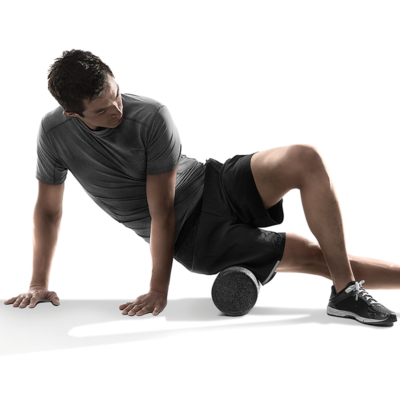
Foam rollers are becoming increasingly popular and for good reason, so let me share with you some of the benefits of foam rolling. They can be an effective and safe tool that may be used for self myofascial release in the comfort of your own home. They are most often used before a workout for a warm up or post-exercise as active recovery. They come in full and half length as well as different densities of foam and, most importantly, are completely portable so there is no excuse for not keeping on top of things!
Here are some of the Benefits of Foam Rolling
Increase flexibility and joint range of motion
Using a foam roller before activity can help stretch out and lengthen muscles which can increase the range of motion available at your joints. Allowing your muscles to work through a greater range may result in better performance and the potential for an increase in strength and power.
Reduce post-exercise soreness
Whether you are an elite athlete or a weekend warrior, most people have experienced soreness after a period of being active. This soreness is often referred to as delayed onset muscle soreness (DOMS). Foam rolling can reduce DOMS post exercise when used straight after the activity as recovery.
Improve circulation
It is vital to have good circulation as this is what carries the oxygen through our bodies. Poor circulation, amongst other things, can lead to compromised immune response. By using a foam roller, we are encouraging blood flow to the desired area. This means more oxygen and nutrients will be delivered to the site which promotes good tissue health and healing which could lead to a faster healing process.
Prevent Injury
Foam rollers can also be an effective tool in injury prevention. At Peak Osteopathy we encourage our clients to engage in a consistent routine of suitable stretching and exercise in order to maintain the body at a low risk level of injury. Foam rollers alone will not prevent injuries but may form part of your management program to help reduce tightness or overuse in key muscle groups.
We always have foam rollers readily available for purchase at the clinic so please don’t hesitate to give us a call or ask your Osteopath if you have been wondering whether a foam roller might be beneficial in the management of you or someone you know.

by Peak Osteo | Jun 6, 2018 | Advice
We all know how a good nights sleep can leave us feeling fresh and ready to the tackle the day, but why is sleep so import? In the second of our posts on sleep Dr Belle Picco, Osteopath, explores this question as well as some of the potential outcomes of not getting enough sleep.
How much sleep is recommended?
The recommended guideline for an adult is 7-9 hours per night. When this isn’t achieved, particularly over consecutive nights, the body and brain begin undergoing a few changes.
Firstly, sleep deprivation can cause an increase in cortisol production. Cortisol is a steroid hormone that is important in regulating blood pressure, blood glucose and our sleep / wake cycles. However, once cortisol builds up it can counter these effects and lead to rapid weight gain, fatigue, high blood pressure and reduced muscle function. Increased levels of cortisol have also been repeatedly linked to an increase in recovery time of musculoskeletal conditions.
During non-REM sleep, the body is able to undergo a repair phase. In this phase the muscles and soft tissue and able to self-heal all while you rest. This is particularly important following an injury or illness. During times of injury or illness the body may need additional sleep to aid this healing process.
Why is sleep so important and what are the benefits?
Adequate sleep has been found to improve performance. On the contrary, sleep deprivation has been linked with an increased risk of injury and a more rapid rate of fatigue. In athletes sleeping less than 6 hours a night there have been consistent findings suggesting they are more likely to sustain an overuse or overload injury than their counterparts sleeping 8 hours or more.
So, how can you get a better night sleep?
Try these few simple tips for an improved night’s sleep:
- Yes, we all know using our phones before bed is bad. But, for those who are too addicted to the screen did you know you can turn down the ‘blue’ light? This is the light that has been linked with poorer sleeping patterns. This can be found in the settings section, under ‘display and brightness’ and is called ‘night shift’ in iPhones.
- Regular exercise – just 20 minutes of exercise a day can help improve your sleeping cycles.
- Develop a routine – try to have a regular and consistent time you go to bed and wake up each day. Having a bit of consistency helps regulate the body’s internal sleep cycle and turn this into a pattern.
- Avoid caffeine after lunch – if it hits 3pm and the afternoon is dragging, instead of reaching for a cup of coffee, try a herbal tea instead.
If you have any questions regarding how sleep may be affecting you, please don’t hesitate to contact the clinic to speak to one of our helpful practitioners.

by Peak Osteo | May 1, 2018 | Advice
As Osteopaths we get asked this question on a regular basis by a variety of patients ” Why do I wake up sore?”. We know that sleep is a restorative activity, one that provides the body with an opportunity for growth and repair, a time to recover from the stress of day-to-day life. Yet some would argue they wake in a worse state of pain compared with how they felt when they pulled the covers over the night before. Dr Damien Ryan (Osteopath) takes us through some of the steps we can take to help decrease those morning aches and pains.
Whats the reason you would wake up sore?
Research shows that Australians are getting an average of 7 hours of sleep per night. So why the pain?
There are many reasons and perhaps it’s time to think of sleep quality rather just quantity.
When we sleep our body is practically motionless. Therefore, it is critical that we optimise this time of low activity to ensure that we wake without pain and start the day feeling fresh, well rested and energised.
Whilst there are many causes for waking in pain we would like to explore two areas that we believe contribute significantly to the quality of the sleep you may be getting and indeed your ability to wake without pain.
Many of us love to sleep on our stomach, but this posture is far from ideal. You may find it comfortable but sleeping on your stomach places the spine in a rotated position that, when held for an extended period, can lead to pain and discomfort.
The main reason for this is the position of your neck and spine. Your neck twisted acutely to one side with your spine working to compensate. These contrasting directional planes of movement may cause you to wake with a headache, neck ache and/or low back pain.
So what can be done to improve the state in which you wake and help transition you towards more of a morning person who bounds out of bed every day?
Firstly, try learning to fall asleep on your side. You may find this a little challenging in the beginning, but sleeping on your side is a far better for position for your body. One handy tip that helps keep the body on its side while you sleep is to place your bottom arm in front of you at all times. A pillow between your knees or a pillow held in front of you can also assist with this. This will help to prevent the body from rolling on to its front as much as possible.
Secondly, ensure your mattress and pillow will support your body properly. Do you have an old favourite pillow that is now wafer thin? Does your mattress slope to the middle? Do you wake up in the centre of the bed in a nice little valley? If so it might be time to review these two key elements to improve your night’s sleep.
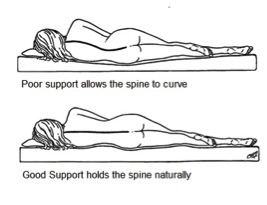
Your mattress needs to support the key areas of your body, allowing the spine to maintain a straight position throughout the night.
A common myth is that a firm mattress is the best kind of mattress. A mattress that is too firm elevates the two parts of the body that make contact with it – the shoulders and hips. This in turn causes an undesirable amount of curvature in the spine.
At the other end of the spectrum a mattress that is too soft presents an opportunity for the body to sink too far into it, which again may cause excessive curvature to the spine.
No single mattress or pillow is perfect for everyone. It is important that when you are purchasing a bed you take the time to lie on it for as long as possible in the position in which you sleep. One minute in the furniture showroom will not give you an accurate guide of how the mattress will perform over eight hours night after night.
A handy way to measure if a pillow is the right size for you is fitting the pillow between your shoulder and neck. The pillow is the right height when it’s the same as distance as from the top bony point on your shoulder to where your neck meets your shoulders. If your pillow is too high or too low the neck will not sit in a neutral position, which may cause compression through the joints of the neck and cause joint irritation or muscle soreness.
To make your life easier memory foam pillows are available at Peak Osteopathy and can be adjusted specifically to support you.
So as you go to bed tonight spare a thought for the muscles and joints in your body that look after you during the day and look after them at night! You will be pleased with not only the quality of sleep you will achieve but also the stiffness and pain you can avoid if you can change from stomach snoozing, paper thin pillows and mattress that do not support you properly.
If you’re wondering whether your mattress or pillow may be contributing to your symptoms persist please don’t hesitate to contact the clinic and a friendly member of the team here at Peak Osteopathy will be happy to help.

by Peak Osteo | Apr 9, 2018 | Advice
We have all heard that we should drink more water and that it is important to stay hydrated, but why? Dr Damien Ryan, Osteopath, takes us through some of the reasons and some handy hints on how to maintain adequate hydration throughout the day.
Did you know that our brains are 80% water? Well you do now, so you can understand the importance of remaining hydrated throughout the day.
But how does dehydration lead to headaches?
When the brain is dehydrated, it begins to shrink and pull away from the skull. This triggers the pain receptors surrounding the brain, producing a headache.
Yet this isn’t the only way dehydration can cause a headache. When dehydrated your blood volume drops, which in turn lowers the flow of blood and oxygen to the brain. This blood volume drop triggers further swelling and inflammation, worsening the headache.

Now all of that sounds quite painful and it can be easily avoided. Here are some handy tips to stay hydrated throughout the day!
- Firstly, monitor the colour of your urine. This is the best way to determine if you are adequately hydrated. A light yellow or clear colour is indicative of being well hydrated;
- Keep a drink bottle at your desk. This simple trick continuously reminds you to drink more water. See bottle, drink from bottle. Easy!
- Leave post-it notes on your computer to drink. This is another effective way to remind yourself to drink more water;
- Remember to have consistent small sips of water, rather than large gulps. This makes it far easier for the body to absorb the fluids you are taking in;
- Some fluids don’t always hydrate you! Caffeinated drinks like coffee and sugary drinks such as Coke are diuretics. These cause the body to excrete fluids faster than the normal rate therefore negatively affecting your body’s fluid mechanics;
- Water can be an effective way to cut out those afternoon sweets and snacks! Often thirst is mistaken for hunger in the body so next time you want a chocolate bar to get you through to dinner – try a glass of water!
But how much should I drink?
- Women should aim to drink about 2 – 2.5L of water a day
- Men should aim to drink slightly more 2.5 – 3.0L per day
What next?
Stand up, fill up your drink bottles and hydrate your brain!
It’s important to remember that dehydration is just one of the many causes of headaches. The Osteopaths and Myotherapists at our clinic see and treat many other types of headaches so if you are wondering whether your headache may be aided by Osteopathic or Myotherapy treatment please feel free to contact the clinic.
by Peak Osteo | Jan 29, 2018 | Advice
Many of you will be returning to work after a well earned break over the Christmas/New Year period and, aside from the obvious frustrations about being stuck at your desk all day, your body may well be reminding you of how much better you felt away from work. The body was not designed to sit at a desk for eight or so hours a day and a large percentage of our patients are with us as a consequence of poor posture, bad desk setups and long periods of time chained to the desk. Dr Nick Brasher, osteopath, runs us through some ideas as to how we can stretch at our desk to help improve a day at work.
So what can you do? Well, unless you win Tattslotto tomorrow, work isn’t going anywhere soon, so it’s a question of what you can do to adapt your work situation to make it easier for your body. Regular breaks, increased lumbar support and staying front on to your monitor are examples of simple changes we can make that can help. Desk and chair setup is crucial and is something you should discuss in more detail with your Osteopath depending on your individual requirements and situation.
In addition to this, we’ve put together a quick selection of exercises you can do in the comfort of your office at regular intervals without distracting you from your work or attracting the gaze of your colleagues too much.
• Shoulder Shrugs
Sitting, arms by your side, shrug your shoulders forward five times and then backwards five times. This gets the whole shoulder girdle moving and works the trapezius muscle, which may find itself in a constant state of tension when sitting with poor posture.
• Shoulder blade squeeze
Sitting upright, arms at your side. Squeeze your shoulder blades together, as if you were trying to grip something between them by pulling your shoulders backwards. Do so as far as is comfortable without pain. Hold for 5 seconds and repeat five times.
• Cervical retractions
Sitting upright, pull your chin in towards your chest (as if to give yourself a “double chin”) until you feel an easy stretch at the base of the skull (without pain). Keep the head centred and facing forward. Hold for 5 seconds and repeat five times.
• Cervical rotations
Sitting upright, turn your head to look over one shoulder until you feel a slight, pain free stretch. Keep neck upright and don’t let it fall forward during the rotation. Repeat five times on either side.
• Upper back extension over the chair
Sitting upright on a chair that doesn’t extend higher than your middle back, place your hands above your neck and arch backwards over the chair looking up towards the ceiling. Only go as far back as comfortable and until you feel a light stretch, no pain. Hold for 3-5 seconds and repeat five times.
• Upper back rotation
Begin sitting with your back straight side on to the back of the chair. Place your hands on either side of the back of the chair and rotate in that direction, keeping your legs and back straight. Hold for 3-5 seconds and repeat five times.
• Lower back extension (standing)
Standing at your desk, feet shoulder width apart with back straight, hands on hips. Gently arch backwards without pain and then return to the upright. Repeat 5 times.
The crucial thing about all of these exercises is to do them within a pain free range and that you should be feeling a light stretch rather than a pull. Pain on stretching is an indicator that you’ve gone too far. You may find that some of these are not appropriate for your condition so if you have any queries please just speak to your Osteopath.
They won’t make your work any easier or the pressure from the boss any less but they will make you more comfortable in your work place which can’t be a bad thing.
Recent Comments